











Blanchet House Goes Electric to Rescue Food in Portland
Thanks to a generous award from Portland General Electric (PGE) Drive Change Fund, made possible by the Oregon DEQ’s Clean Fuels Program, Blanchet House is purchasing an electric food rescue van with an on-site charging station.
Blanchet House rescues surplus food from grocery stores, businesses, events, and other partners throughout the Portland metro area. The food is brought to our downtown Portland kitchen, where it is turned into 1,200 to 1,500 free meals each day for people experiencing hunger and homelessness. Our new electric food rescue van will allow us to continue this work while reducing transportation-related carbon emissions.

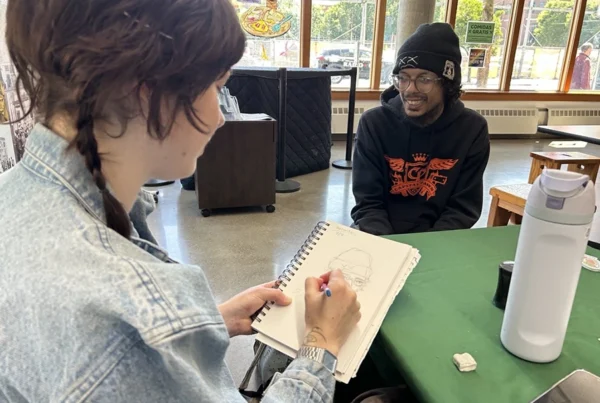
A mockup of artwork created by Portland artist Wokeface for Blanchet House’s electric food rescue van.
How Blanchet House Rescues Surplus Food in Portland
Every day, our driver travels throughout the Portland Metro area to pick up good, surplus food donated by grocery stores, businesses, events, and other community partners. Instead of going to waste, we turn this food into free meals for people experiencing hunger and homelessness. It’s hard to believe that an organization serving so many people has only one vehicle.
That’s a lot of driving!
What should we name our van? Submit your idea here!
Now, with an all-electric cargo van, we will be able to rescue food while reducing the environmental impact of getting it from donors to our kitchen. We expect our new van to travel approximately 20,000 miles annually and reduce carbon emissions by about 8 metric tons each year. {source: Your Car vs. an Electric Vehicle | US EPA}
Transportation accounts for 35% of Oregon’s greenhouse gas emissions. {Source: Oregon Department of Environmental Quality} Transitioning from fossil fuels to electric vehicles is one of the quickest ways organizations like ours can help reduce pollution.

Produce gleaned from a local grocery store.
How Climate Change Affects People Experiencing Homelessness
Just like poverty, climate change doesn’t affect everyone equally. As climate change contributes to more extreme weather, people face greater risks to their health and homes.
Our clients experiencing homelessness and housing insecurity are especially vulnerable to hazardous heat, wildfire smoke, freezing temperatures, and other extreme weather. Without reliable access to shelter, air conditioning, clean air, or other protections, weather can be life-threatening.
We see the negative impacts firsthand at Blanchet House, when people seek us out for relief and a safe place to get out of the elements.
What’s Your Carbon Footprint?
Our new electric van also gives us a chance to think about the environmental impact of our everyday choices. Understanding our impact can help us identify where meaningful changes are possible.
Want to learn more about your carbon footprint? Online tools can help estimate the impact of transportation, home energy use, food, and other activities.
Calculate your carbon footprint: Carbon Footprint Calculator | US EPA
Learn about ways to reduce your carbon footprint: Clean Energy Choices | PGE
The Drive Change Fund awards grants for transportation electrification projects in our community. Thank you to PGE and the Oregon DEQ’s Clean Fuels Program for supporting organizations like Blanchet House on the journey toward a cleaner, greener future.